
Sectional vs Traditional Sofa: Which Is Right for You?
Choosing between a sectional and a traditional sofa is one of the most important furniture decisions you'll make. This comprehensive guide breaks down space, seating, cost, and style factors so you can choose with confidence.
JUMP TO VERDICTThe Core Dilemma: A sectional sofa wraps around your space and seats more people, while a traditional sofa offers flexibility and timeless elegance. Neither is universally better — the right choice depends entirely on your room dimensions, lifestyle, and design goals.
Whether you're furnishing a cozy apartment or a spacious family room, understanding the trade-offs between these two furniture giants will save you money, regret, and backaches from returns.
What Is the Difference Between a Sectional and a Traditional Sofa?
A sectional sofa is a multi-piece seating unit that typically includes a main sofa body plus a chaise, corner wedge, or additional armless section. These pieces connect to form an L-shape, U-shape, or curved configuration. A traditional sofa, by contrast, is a single, freestanding piece of furniture with a fixed back and arms — usually designed to seat two to four people in a straight line.
The fundamental distinction comes down to configuration flexibility. Sectionals are modular by nature (especially modular sectionals), allowing you to rearrange or expand seating. Traditional sofas are fixed — what you buy is what you get. This single difference cascades into every other comparison: space usage, seating capacity, cost, and style.
It's also worth noting that "traditional sofa" in this context refers to any freestanding couch — including loveseats, three-seaters, and sofa beds — regardless of its design style. The term here describes form factor, not aesthetic.
Space & Layout: How Each Fits Your Room
Space is the number one factor that pushes buyers toward one option or the other. Sectionals excel in open-concept layouts where they can anchor a living area and define zones without walls. A well-placed L-shape sectional can separate a living room from a dining area while maximizing corner usage.
Traditional sofas, however, are more forgiving in tight or oddly shaped rooms. Because they're freestanding, you can float them, angle them, or pair them with accent chairs and ottomans. This flexibility is especially valuable in apartment sofas setups where every inch counts and furniture may need to be reconfigured for different activities.
For very small spaces, a small space sectional with a reversible chaise can actually save room by eliminating the need for a separate ottoman or recliner. Conversely, a large room sectional can feel overwhelming in a modest living room, while a traditional sofa paired with chairs maintains visual balance.
Quick Space Guide
Sectional Sofa
- ✓ Maximizes corner space
- ✓ Great for open-concept rooms
- ✓ Defines seating zones naturally
- ✗ Requires careful measuring
- ✗ Difficult to rearrange
- ✗ Can overwhelm small rooms
Traditional Sofa
- ✓ Fits oddly shaped rooms
- ✓ Easy to move and rearrange
- ✓ Pairs well with accent chairs
- ✗ Wastes corner space
- ✗ Needs extra seating pieces
- ✗ Less seating per footprint
Seating Capacity: How Many People Can Sit Comfortably?
Sectionals win on raw seating numbers. A typical U-shape sectional can seat six to eight people comfortably, while an L-shape sectional usually accommodates four to six. Traditional sofas max out at three to four seats, meaning you'll need additional chairs or a second sofa to match a sectional's capacity.
However, more seats don't always mean better seating. Sectional corner seats can feel awkward for extended lounging, and the chaise often becomes a catch-all for pillows and blankets. Traditional sofas offer uniform, well-defined seats that are easier to assign and more comfortable for conversation.
For families with children or frequent guests, a family room sectional with a sleeper sectional function provides both everyday seating and overnight accommodation. A traditional sofa bed can do the same but usually seats fewer people when not deployed.
Consider your real-world usage: If you regularly host movie nights or have a large household, the sectional's seating density is a major advantage. If you mostly sit solo or as a couple, a traditional sofa plus a comfortable armchair may be all you need.
Comfort & Functionality: Lounging, Reclining, and Sleeping
Comfort is subjective, but functionality is measurable. Sectionals offer more lounging options — chaises for stretching out, corner seats for curling up, and reclining sectional sofas that combine both. If you love reclining, a power reclining sofa in a sectional configuration gives you multiple reclining seats without needing separate recliners.
Traditional sofas are often more comfortable for upright sitting and conversation. Their uniform cushion height and depth make them ideal for reading, working, or entertaining. If you want a recliner, you'll need to buy a separate piece — which adds cost and takes up space.
For sleeping, both options have solutions: sleeper sectionals and sofa beds (traditional) both convert into beds. Sleeper sectionals tend to be heavier and harder to open, while traditional sofa beds are generally easier to operate but offer less seating when closed.
Comfort Features Comparison
| Feature | Sectional Sofa | Traditional Sofa |
|---|---|---|
| Reclining Options | Multiple reclining seats available | Requires separate recliner |
| Chaise / Lounging | Built-in chaise common | Needs ottoman or recliner |
| Sleeping Function | Sleeper sectional available | Sofa bed available |
| Conversation Comfort | Corner seats less ideal | Uniform, upright seating |
| Customization | Modular, expandable | Fixed configuration |
Cost & Value: Which Gives You More for Your Money?
Price is where the comparison gets interesting. A quality traditional sofa typically ranges from $800–$2,500, while a comparable sectional usually starts around $1,200–$3,500. The sectional's higher price reflects more materials, more complex construction, and often more upholstery work.
But value isn't just about the sticker price. A sectional replaces a sofa plus one or two chairs, which can make it cost-effective if you need the extra seating. A traditional sofa, however, lets you buy incrementally — start with the sofa, add chairs later as budget allows.
For budget-conscious buyers, budget sofas guide offers strategies for finding affordable options in both categories. If you're looking for long-term value, premium sofas guide covers what to expect at higher price points. And for the best bang for your buck, value for money sofas highlights models that balance price and quality.
Maintenance costs also differ. Sectionals have more seams and cushions, which can mean higher cleaning and repair costs over time. Traditional sofas are simpler to maintain and recover. Learn more about protecting your investment with extend sofa lifespan tips.
Style & Aesthetics: Design Considerations
Traditional sofas have a timeless quality that fits almost any décor. Whether you prefer modern sofa style or traditional sofa style, a freestanding sofa is a classic anchor piece that never feels dated. They're also easier to style with throw pillows and throw blankets because their clean lines provide a neutral canvas.
Sectionals make a bolder statement. A curved sectional or velvet sectional can become the focal point of a room. But their large footprint can dominate a space, and their shape may limit design flexibility. If you like to change your layout or décor frequently, a sectional can feel restrictive.
Fabric choices apply to both. Leather sectionals and leather traditional sofas offer durability and elegance. Fabric sectionals and fabric traditional sofas provide warmth and variety. For high-traffic homes, consider performance fabric sofas or stain resistant sofas in either style.
If you have pets or kids, pet friendly sofa fabrics and kid friendly sofa fabrics guides can help you choose materials that withstand daily life — regardless of whether you go sectional or traditional.
Sectional vs Traditional Sofa: Pros and Cons at a Glance
Sectional Sofa
Pros
- Seats more people in less floor space
- Built-in chaise and reclining options
- Defines open-concept living areas
- Modular versions can be reconfigured
- Great for family rooms and movie nights
Cons
- Harder to rearrange or move
- Can overwhelm small rooms
- Higher initial cost
- Corner seats less comfortable for some
- More seams mean more maintenance
Traditional Sofa
Pros
- Easy to move and rearrange
- Fits oddly shaped rooms
- Timeless, versatile style
- Lower entry price
- Simpler to clean and maintain
Cons
- Seats fewer people
- Needs extra chairs for large groups
- No built-in chaise or recliner
- Wastes corner space
- Less seating density per square foot
How to Decide: A Step-by-Step Buying Guide
Still on the fence? Work through these steps to make a confident decision that fits your home and lifestyle.
- Measure your space. Use our sofa size guide to determine how much room you have. Mark the footprint with tape on the floor to visualize both options. Don't forget traffic flow — leave at least 18 inches between furniture pieces.
- Count your typical seating needs. How many people live in your home? How often do you host? If you regularly seat five or more, a sectional is likely the better fit. If it's usually two to four, a traditional sofa may suffice.
- Consider your room shape. Open-concept or square rooms favor sectionals. Narrow, long, or oddly shaped rooms favor traditional sofas with accent chairs.
- Think about flexibility. Do you rearrange furniture often? Move apartments? A traditional sofa is far easier to relocate. A modular sectional offers some flexibility but is still heavier and bulkier.
- Set a realistic budget. Sectionals start around $1,200 and can exceed $5,000 for premium models. Traditional sofas range from $800 to $2,500 for quality pieces. Factor in accessories — a sectional may need fewer, a traditional sofa may need more.
- Choose your material. Both styles come in fabric and leather. Consider fabric durability ratings and your lifestyle. Pets? Kids? Opt for performance fabric or microfiber sofas for easy cleanup.
- Plan for maintenance. All sofas need care. Learn how to clean sofa fabric or leather sofa cleaning techniques. Use fabric protector guide and sofa pads guide to extend lifespan.
- Test before you buy. Sit on both. Lounge. Recline. Imagine your daily routine. If ordering online, read reviews and check return policies. Use first sofa checklist to avoid missing critical details.
The Verdict: Which One Should You Choose?
Choose a Sectional Sofa If:
You have an open-concept or square room, need to seat five or more people regularly, love lounging with a chaise, want built-in reclining or sleeping options, and you're okay with a furniture piece that stays put. A L-shape sectional or U-shape sectional is perfect for family rooms, movie rooms, and large living areas.
Choose a Traditional Sofa If:
You live in a smaller or oddly shaped space, need furniture that's easy to move, prefer a timeless look that adapts to changing décor, want to seat a smaller number of people comfortably, and prefer buying incrementally (sofa now, chairs later). Pair your sofa with accent chairs for flexible seating.
The Balanced Approach:
Consider a modular sectional that can be reconfigured or partially separated. It gives you sectional seating density with traditional sofa flexibility — the best of both worlds for many homes. Or, if space permits, a traditional sofa paired with a chaise sectional piece offers similar versatility.
Frequently Asked Questions
Is a sectional better than a traditional sofa?
Neither is inherently better. A sectional is better for large rooms and high seating needs; a traditional sofa is better for small spaces and flexibility. The best choice depends on your room size, seating requirements, and lifestyle.
Do sectionals make a room look smaller?
Yes, if they're too large for the space. A bulky sectional in a small room can feel overwhelming. However, a small space sectional with a light color and low profile can actually maximize seating without visually shrinking the room.
Can I use a sectional in a small apartment?
Absolutely — if you choose the right size. Look for apartment sofas or compact L-shape sectionals with reversible chaises. Measure carefully and consider a modular sectional that can be split into separate pieces if needed.
Which is more expensive: a sectional or a traditional sofa?
Sectionals generally cost more because they include more materials and complex construction. A quality traditional sofa ranges from $800–$2,500, while a comparable sectional starts around $1,200 and can exceed $5,000. However, a sectional may replace multiple pieces, making it cost-effective for large seating needs.
How long does a sectional or traditional sofa last?
A well-made sofa of either type lasts 7–15 years depending on frame quality, cushion materials, and maintenance. Sofa frame repair and cushion replacement can extend lifespan. Proper care — sofa maintenance schedule, cushion flipping guide — makes the biggest difference.
Can I put a sectional in the middle of a room?
Yes, but it works best with a console table behind it or in an open-concept space where the sectional defines zones. A traditional sofa is easier to float because it has a finished back and doesn't rely on walls for support. Check sofa placement tips for guidance.
Ready to Find Your Perfect Sofa?
Browse our recommended sectional sofas below — selected for comfort, durability, and value.
View Recommended SofasRecommended Sectional Sofas & Traditional Couches
⚠️ AFFILIATE DISCLOSURE: This website contains affiliate links. As an affiliate Associate, we earn from qualifying purchases. If you make a purchase through these links, we may receive a small commission at no additional cost to you. Read our full affiliate policy.

Boneless Couch, Cloud Couch Sofa, Sectional Couches for Living Room | Comfy L-Shaped Modern Sectional Sofa, Upholstered Corduroy Couch with Storage Pocket for Apartment, No Assembly Required
Check price on Amazon
KEIKI 94" L-Shaped Oversized Modular Linen Sectional Sofa with Rolled Arms, Cushion Back, Modern Style Convertible 5-Seater Corner Couch, Easy Assembly, for Apartment, Living Room, Bedroom, Beige
Check price on Amazon
Korser 108" L-Shaped Modular Sectional Sofa with Chaise, Boneless Comfy Corduroy Fluffy Couch with Deep Seat and Side Pockets, Flexible Module Combination for Living Room, No Assembly, Side Pockets
Check price on Amazon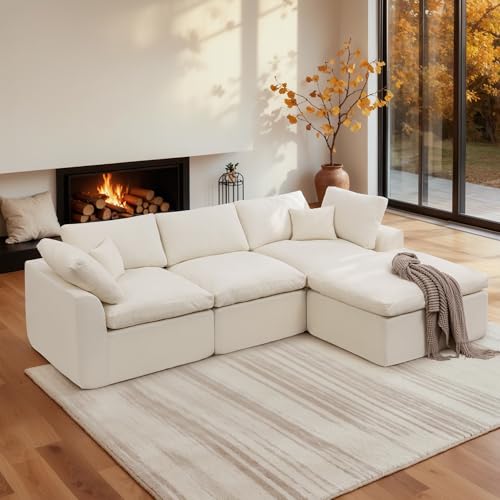
Korser 110" Cloud Sectional Couches for Living Room, Modern Modular Sectional Sofa with Ottoman, Boneless Cloud Couch with Comfy Deep Seats, Fluffy Chenille L-Shape Sofa Couch for Living Room, Beige
Check price on Amazon
134" Boneless Couches for Living Room - Modular Sectional Sofa U Shaped Oversized Deep Seat High Back Corduroy No Assembly Modern Cloud Big Comfy Floor Couches (Black)
Check price on Amazon
Hawarida Modular Sectional Couch for Living Room, U Shaped Comfy Sofa | Comfortable Foam Cushions, Sturdy Frame, Appealing Look, Easy Assembly, Soft Chenille Fabric, Movable Ottoman, Dark Gray
Check price on Amazon
109 Inch Modular Sectional Sofa, L Shaped Couch with Storage Ottoman, Gray | 4 Seat, Easy to Move, Flexible Setup, Separate Ottoman, Pet-Friendly Durable Fabric, Deep Comfort Seat, Easy Assembly
Check price on Amazon